What Is Online Marketing? A Practical Guide for Businesses
Introduction
A business can offer an excellent product and still struggle to find customers. The problem is not always the product. Sometimes, the right people simply do not know the business exists.
That is where online marketing comes in.
Online marketing means promoting a business, product, or service through internet based channels such as search engines, websites, social media, email, and online advertisements. It helps businesses reach relevant audiences, build trust, generate enquiries, and increase sales.
However, creating a website or posting on social media is not enough. Effective marketing requires a clear audience, a useful message, and a way to measure whether the activity is producing results.
Table of Contents
What Is Online Marketing?
How Does Online Marketing Work?
Types of Online Marketing
Benefits of Online Marketing
Common Online Marketing Mistakes
How to Build an Online Marketing Strategy
Frequently Asked Questions
Conclusion
1. What Is Online Marketing?
Online marketing is the process of promoting products or services using internet based platforms and digital communication channels.
For example, imagine a local clothing store wants to attract more customers. It could create a website, publish product photos on Instagram, appear in relevant local search results, and run paid advertisements for seasonal offers.
Each activity helps potential customers discover the store in a different way.
Unlike traditional advertising, many online marketing activities can be measured using data such as website visits, enquiries, conversion rates, and sales. However, accurate measurement depends on proper tracking and reliable data.
The goal is not simply to attract attention. It is to connect the business with people who are likely to need what it offers.
2. How Does Online Marketing Work?
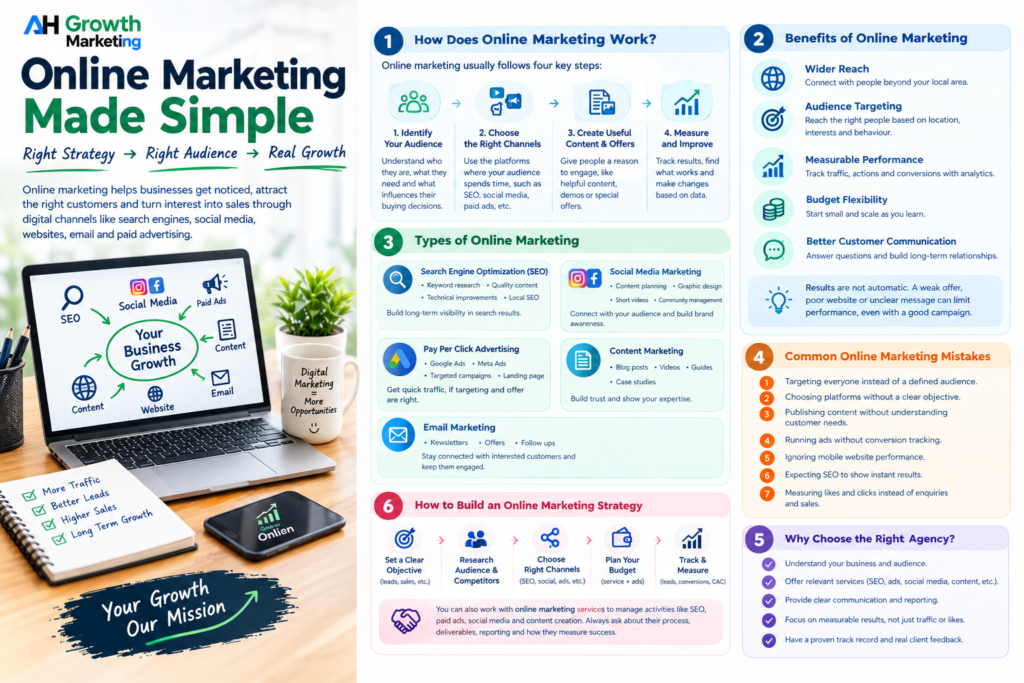
Online marketing generally involves four important steps.
Step 1: Identify Your Audience
Understand who your customers are, what problems they face, and what influences their buying decisions.
A business selling accounting software, for example, may target small business owners rather than a broad audience with no specific interest.
Step 2: Choose the Right Channels
Select platforms based on customer behaviour and business goals. SEO may help people discover your website through search engines, while social media can introduce your brand to new audiences.
Step 3: Create Useful Content and Offers
Give potential customers a reason to engage. This could be a helpful article, product demonstration, free consultation, or clear explanation of your services.
Step 4: Measure and Improve
Track relevant results and identify what needs improvement. If an advertisement attracts visitors but generates no enquiries, review the audience, offer, and landing page before increasing the budget.
3. Types of Online Marketing
Search Engine Optimization
SEO improves a website’s visibility in organic search results. It includes keyword research, useful content, technical improvements, internal linking, and website optimization.
For example, a local plumber could publish a service page explaining the plumbing services offered in the areas it serves.
SEO can support long term visibility, but results depend on competition, website quality, content, and implementation.
Social Media Marketing
Social media marketing uses platforms such as Facebook, Instagram, and LinkedIn to share content, communicate with audiences, and promote products or services.
A bakery could post cake designs, explain customization options, and share customer feedback with permission.
Consistent posting helps, but content should serve a purpose rather than exist simply to fill a calendar.
Pay Per Click Advertising
Paid advertising allows businesses to promote offers through platforms such as Google Ads and Meta Ads.
It can help generate traffic quickly, provided the targeting, offer, budget, and landing page are suitable.
Remember that clicks cost money. A campaign should be judged by meaningful results, not by how impressive its traffic numbers look.
Content Marketing
Content marketing involves publishing useful material such as blog posts, videos, guides, and case studies.
A digital marketing agency might publish an article explaining how businesses can improve their local SEO. Readers who find the advice useful may later consider its services.
Helpful content builds understanding and gives potential customers a reason to trust your expertise.
Email Marketing
Email marketing allows businesses to communicate with subscribers who have agreed to receive messages.
Companies can share educational content, product updates, offers, and relevant follow up messages. The focus should be on usefulness and relevance, not sending promotional emails every other day.
4. Benefits of Online Marketing
Online marketing can help businesses in several ways.
Wider reach: Businesses can connect with audiences beyond their immediate location.
Audience targeting: Advertising platforms offer options for reaching people based on factors such as location, interests, and search behaviour.
Measurable performance: Analytics can help marketers understand traffic sources, user actions, and conversions.
Budget flexibility: Businesses can begin with selected channels and adjust spending as they learn.
Better customer communication: Websites, social media, and email provide opportunities to answer questions and maintain relationships.
Results are not automatic. A weak offer, poor website experience, or unclear message can limit performance even when the campaign receives plenty of attention.
5. Common Online Marketing Mistakes
Businesses often make avoidable mistakes, including:
Targeting everyone instead of a defined audience.
Choosing platforms without a clear business objective.
Publishing content without understanding customer needs.
Running advertisements without conversion tracking.
Ignoring mobile website performance.
Expecting SEO to produce immediate results.
Measuring likes and clicks while ignoring enquiries and sales.
The solution is to define a clear goal, choose relevant channels, track meaningful outcomes, and improve the strategy using evidence.
6. How to Build an Online Marketing Strategy
Start with one specific business objective, such as increasing qualified enquiries or growing online sales.
Next, research your audience and competitors. Choose the channels that match your customers’ behaviour and your available resources.
Create a realistic budget that separates service fees from advertising expenditure. Then establish a measurement process using relevant metrics, such as qualified leads, conversion rates, and customer acquisition costs where reliable data is available.
Professional online marketing services can help businesses plan and manage activities such as SEO, paid campaigns, social media marketing, and content creation.
Before hiring a provider, ask about its process, deliverables, reporting, and how it will evaluate success. Be cautious of guaranteed rankings or sales promises.
7. Frequently Asked Questions
Online marketing means promoting a business, product, or service through internet based channels such as search engines, websites, social media, email, and online advertisements.
The main types include SEO, social media marketing, paid advertising, content marketing, email marketing, and affiliate marketing.
Yes. Small businesses can begin with focused activities such as local SEO, useful social media content, or a carefully managed advertising campaign.
Costs depend on the channels used, competition, campaign complexity, and service provider. Some activities require more time than money, while paid campaigns require an advertising budget.
Conclusion
Online marketing helps businesses reach potential customers through search engines, social media, websites, email, and online advertisements.
The best approach depends on your audience, business goals, budget, and competition. You do not need to use every channel at once. Start with the activities most likely to address your current business needs, measure the results, and improve your approach over time.
Need Help With Your Online Marketing Strategy?
AH Growth Marketing helps businesses explore SEO, performance marketing, social media marketing, and website development based on their goals.