Role of SEO in Digital Marketing
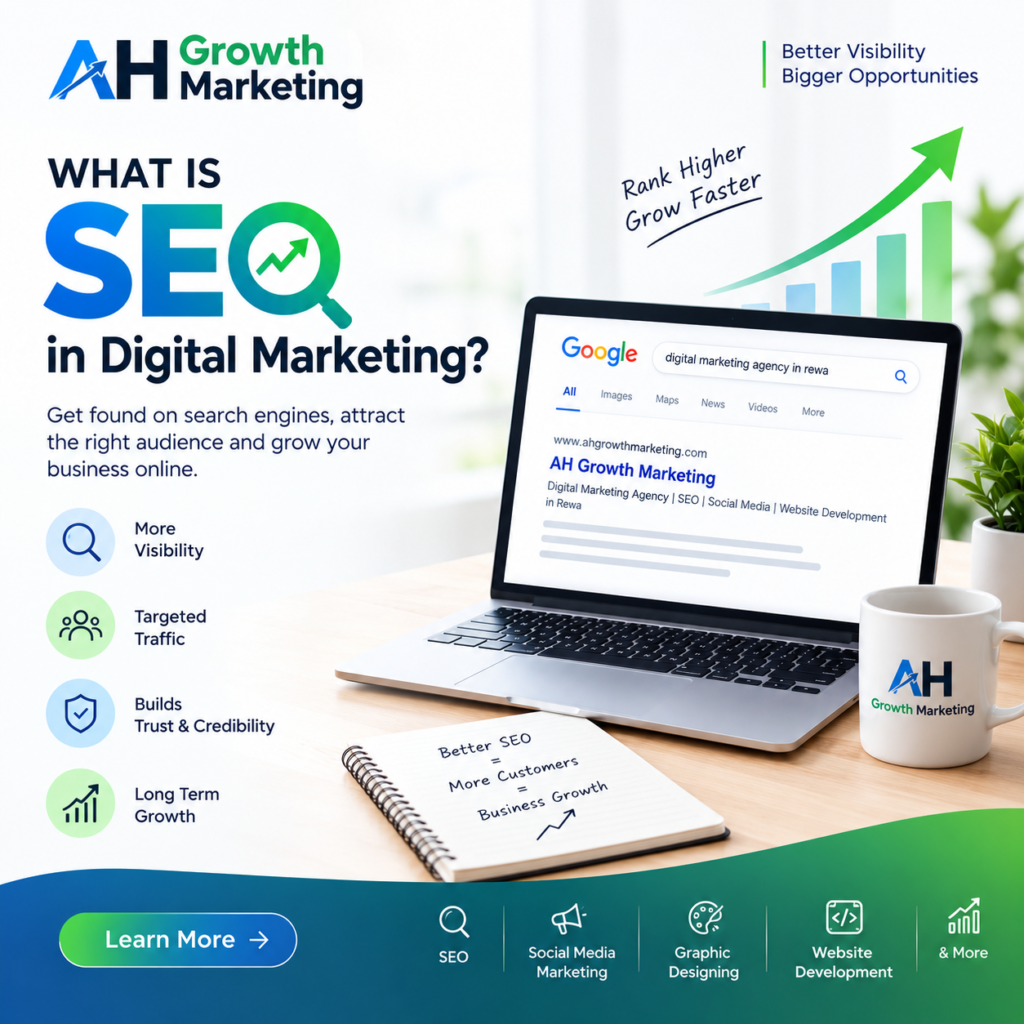
Introduction
The role of SEO in digital marketing is simple. It helps people find your website when they search for products, services, or information online. Without SEO, even a well designed website can remain invisible to potential customers. Looking good is useful, but it does not automatically bring visitors.
Imagine you own a digital marketing agency. Your website explains your services, displays your portfolio, and has a contact form. However, when someone searches for a digital marketing agency, your website does not appear in relevant results. Potential customers may never discover your business.
This is where search engine optimization becomes important. SEO helps search engines understand your website and helps users discover useful content that matches their needs.
Let’s explore how SEO works, why it matters, and how businesses can use it to attract the right audience.
Table of Contents
What Is SEO in Digital Marketing?
Why Is SEO Important in Digital Marketing?
How Does SEO Work?
Main Types of SEO
Key Benefits of SEO for Businesses
Common SEO Mistakes to Avoid
How to Improve Your SEO Strategy
Frequently Asked Questions
Conclusion
1. What Is SEO in Digital Marketing?
Search engine optimization, commonly called SEO, is the process of improving a website so that search engines can understand its content and users can find it through relevant organic search results.
Organic results are unpaid listings on search engine results pages. Unlike paid search advertisements, you do not pay for each click received from an organic listing.
SEO includes several activities, such as keyword research, content improvement, technical optimization, internal linking, and earning relevant backlinks.
For example, if you provide website development services in Rewa, you might create a useful page targeting people searching for website development services in that area.
However, simply adding a keyword to a page will not guarantee rankings. Your content must answer the user’s question, offer a good experience, and provide information that deserves to be found.
2. Why Is SEO Important in Digital Marketing?
The importance of SEO in digital marketing comes from its ability to connect businesses with people who are already looking for relevant information, products, or services.
Here are some important reasons.
It Helps People Discover Your Business
A website that appears for relevant searches has more opportunities to attract potential customers. SEO improves your chances of being discovered when people search for services related to your business.
It Attracts Relevant Traffic
Not every website visitor is a potential customer. SEO helps you target search queries that match your services and audience.
For example, someone searching for SEO services may be more relevant to an SEO agency than someone searching for the meaning of SEO.
Understanding search intent helps you create content for the right audience.
It Builds Trust and Credibility
People often use search engines to research businesses before contacting them. Helpful content, clear service information, genuine testimonials, and a secure, usable website can support trust.
However, ranking highly does not automatically prove that a business is trustworthy. Your website must deliver on its promises.
It Supports Long Term Marketing
Paid advertisements can bring traffic while campaigns are running. SEO can continue attracting visitors to useful pages after publication, although rankings and traffic can change over time.
SEO requires ongoing work. It is not a magic button that you press once and forget.
3. How Does SEO Work?
SEO works by making your website easier to discover, understand, and use.
Keyword Research
Keyword research identifies the words and phrases people use when searching online.
For example, a digital marketing agency might target phrases such as:
SEO services for small businesses
Digital marketing agency in Rewa
How to improve website rankings
Importance of SEO in digital marketing
Choose keywords based on relevance, search intent, competition, and business goals rather than search volume alone.
On Page SEO
On page SEO improves individual pages through relevant titles, headings, useful content, descriptive image text, and internal links.
Each page should have a clear purpose. A service page should explain the service, its benefits, and how customers can enquire. A blog article should answer the reader’s question.
Technical SEO
Technical SEO helps search engines crawl and understand your website.
Important areas include mobile usability, page loading performance, crawlability, indexability, site structure, and appropriate canonical tags.
A website can look attractive and still have technical problems that prevent important pages from appearing in search results.
Off Page SEO
Off page SEO includes activities that build your website’s reputation beyond your own pages.
Relevant backlinks from trustworthy websites can help search engines understand your site’s connections and authority. Focus on earning links through useful resources, genuine relationships, and quality content rather than buying large numbers of questionable links.
4. Main Types of SEO
Different types of SEO address different aspects of website performance.
| Type of SEO | Main Purpose | Example |
|---|---|---|
| On Page SEO | Improve page content and relevance | Optimizing titles and headings |
| Technical SEO | Improve crawling and indexing | Fixing broken internal links |
| Off Page SEO | Build reputation and relevant links | Earning links from industry websites |
| Local SEO | Improve visibility for local searches | Optimizing a Google Business Profile |
A business does not always need to focus equally on every type. A local service provider may prioritize local SEO, while a national information website may need a stronger content and technical strategy.
The right approach depends on your audience, business model, and current website condition.
5. Key Benefits of SEO for Businesses
SEO can support business growth in several ways.
More organic visibility: Your pages can appear for relevant searches without paying for every organic click.
Better user experience: Clear navigation, useful content, and improved page performance can help visitors find information more easily.
Qualified leads: Targeting relevant commercial searches can connect your business with people who are researching or comparing services.
Content value: A helpful article may attract visitors for months or years, provided it remains relevant and competitive.
Measurable performance: Tools such as Google Search Console and Google Analytics can help you evaluate impressions, clicks, engagement, and conversions.
Remember that traffic is not the final goal for most businesses. Relevant enquiries, sales, and customer satisfaction matter more than a large visitor count that produces no meaningful results.
6. Common SEO Mistakes to Avoid
Many businesses make SEO harder than it needs to be.
Stuffing Keywords Into Every Paragraph
Repeating the same phrase unnaturally makes content difficult to read. Use your primary keyword where it fits and include related terms naturally.
Publishing Content Without Understanding Search Intent
An article targeting a commercial keyword may fail to satisfy readers if it only provides a general definition.
Study what users are trying to accomplish, then create the appropriate page.
Ignoring Technical Problems
Broken links, accidental noindex settings, and poor mobile usability can undermine otherwise useful content.
Review technical performance regularly instead of assuming everything works because the homepage loads.
Expecting Immediate Results
SEO usually requires sustained effort. Competition, website history, content quality, and technical conditions can all affect how quickly results appear.
Avoid anyone promising guaranteed first page rankings within a fixed number of days.
7. How to Improve Your SEO Strategy
If you want to improve SEO for your website, start with these practical steps.
Audit your website: Identify indexing issues, broken links, slow pages, and content gaps.
Research your audience: Find out what potential customers search for and what information they need.
Create useful pages: Develop service pages and articles that answer real questions clearly.
Improve internal linking: Connect related articles and service pages to help users navigate your website.
Optimize page titles: Write accurate, descriptive titles that explain the page’s topic.
Measure performance: Use Google Search Console to review search impressions, clicks, queries, and indexing information.
Update strategically: Improve pages when information becomes outdated or performance data reveals a problem.
For example, AH Growth Marketing could create an SEO service page, publish educational articles about keyword research, and connect those articles to the relevant service page. This creates a clearer journey from learning about SEO to exploring professional services.
Measure actual performance before claiming success. If rankings, leads, or conversions improve, document the dates, changes made, and supporting data.
8. Frequently Asked Questions
SEO helps websites become more visible in relevant organic search results. It supports discovery, attracts potential customers, and helps businesses provide useful information to their target audience.
SEO gives small businesses an opportunity to reach people searching for relevant services. Local SEO can be especially useful for businesses serving specific cities or regions.
No. SEO can bring relevant visitors, but sales also depend on your offer, pricing, website experience, reputation, and sales process. Rankings alone do not guarantee revenue.
9. Conclusion
The role of SEO in digital marketing goes beyond getting a website to rank on Google. It helps businesses connect useful information with the people who need it, improve website accessibility, attract relevant visitors, and build sustainable organic visibility.
The strongest SEO strategies combine technical quality, helpful content, relevant keywords, and consistent measurement. Start by understanding your audience and fixing the most important problems on your website. Then improve your content based on real search performance.
SEO takes work, but guessing is usually more expensive than having a clear strategy.
Want to improve your website’s search visibility? Explore the SEO and digital marketing resources from AH Growth Marketing to understand how keyword research, content optimization, and technical improvements can support your business goals.